Austin Home Austin Home

7 Best Ways to Install Hidden Storage in Your Living Room?

Time:2026-09-23 Author:Liam
0%

A calm living room often depends on what remains unseen. Toys, remotes, blankets, books, and charging cables can quickly occupy every visible surface. Learning how to install hidden storage in your living room helps protect the room’s style while making daily routines easier. The best solutions should feel natural, remain accessible, and match the structure of your home.

Julie Morgenstern, a professional organizer and author, offers a useful principle: “Organizing is not about getting rid of everything you own... It’s about living the way you want to live.” That idea matters here. Hidden storage should support real habits, not create another system you forget to use. A lift-top coffee table may suit frequent readers, while a built-in bench can hold seasonal blankets near the window. Even a shallow cabinet behind framed wall panels can hide routers and small electronics.

Measure twice. Plan once.

This guide explores seven practical ways to create concealed storage without making the room feel crowded. It considers furniture, wall cavities, unused corners, and overlooked vertical space. Safety also matters. Heavy cabinets need secure anchoring, electrical equipment needs airflow, and doors should open without blocking walkways. Some ideas may look perfect in photographs but feel inconvenient at home. That is worth admitting. Your household’s routines, wall construction, and available budget should guide the final choice, not appearance alone. With careful planning and honest testing, hidden storage can make a living room cleaner, quieter, and more comfortable.
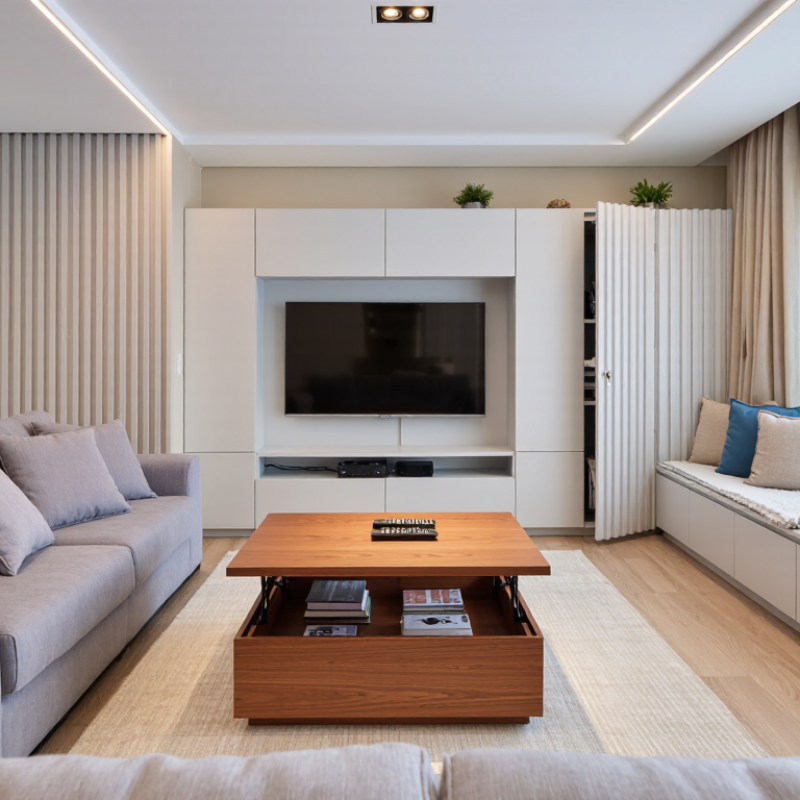
7 Best Ways to Install Hidden Storage in Your Living Room?

Assess Your Living Room and Plan Concealed Storage

Before installing hidden storage, study how your living room actually works. Measure each wall, doorway, window, and heating vent. Record ceiling height and the swing of nearby doors. A cabinet that fits on paper may block movement in daily use.

Walk through the room at different times. Notice where sunlight falls, where people place books, and which corners collect clutter. Keep sockets accessible, especially behind media units or seating. Avoid covering vents or drilling into uncertain walls. I once planned a narrow storage bench without checking the radiator. The design looked clean, but the heat damaged the finish. That mistake changed my measuring routine.

Tips: Use masking tape to outline proposed units on the floor and wall. Leave comfortable walking space around them. Choose shallow compartments for remotes, blankets, and games. Use deeper storage only where the room remains easy to navigate. Label each section by purpose, not by appearance. Hidden doors should open smoothly and quietly. Test them with one hand while carrying a cushion. If the room feels crowded during this test, revise the plan. A professional installer can check wall strength, ventilation, and safe fixing points before construction. Keep a simple sketch with measurements, materials, and access notes. It prevents rushed decisions, though my sketches still need a second review.

Build Hidden Storage Beneath Sofas, Benches, and Window Seats

7 Best Ways to Install Hidden Storage in Your Living Room?

Built-in storage beneath sofas, benches, and window seats can reclaim overlooked floor space. The 2024 National Association of Home Builders’ What Home Buyers Really Want report shows strong demand for dedicated storage, including linen closets and pantry space. That preference also applies to living rooms, where blankets, books, toys, and cables quickly create visual clutter.

A lift-up sofa base works well for bulky items, but hinges must support the full seat weight. I prefer gas-assisted hardware and a shallow internal divider. It prevents cushions from becoming a storage lid. Measure twice. Beneath a bench, use full-extension drawers with recessed pulls. Keep drawer boxes away from skirting boards and heating vents. For daily access, drawers usually outperform a removable seat.

Window seats offer deeper capacity, especially in bay windows. Add a sealed plywood box, ventilation gaps, and a moisture-resistant finish near cold glass. The U.S. Environmental Protection Agency recommends controlling indoor moisture, since excess humidity can encourage mould growth. That detail is easy to overlook. My first window-seat design used soft-close hinges but lacked enough clearance for thick cushions. It worked, technically, but felt awkward in practice. Hidden storage should disappear visually, not become difficult furniture. Labeling interior zones also helps families return items quickly, even when the room is busy.

Convert Unused Wall Space into Discreet Cabinets and Shelves

Unused wall space can become valuable storage without making your living room feel crowded. Measure the wall, skirting board, and nearby furniture before cutting anything. A shallow recessed cabinet works well for remotes, books, and small electronics. If the wall is not suitable for recessing, use a full-height cabinet with flat doors instead.

Floating shelves offer another discreet option. Paint them the same color as the wall to reduce visual noise. Add a narrow shelf above the sofa for framed photographs, while closed compartments below hide cables and paperwork.

A built-in media panel can conceal wiring, but leave airflow around electrical equipment. Never block vents or cover access points.

For heavier items, locate the wall studs and use suitable fixings. Adjustable shelves make the space more useful when your storage needs change. Push-latch doors create a clean appearance, while handle-free drawers suit modern rooms. You can also combine a window seat with lift-up storage, or add a slim cabinet beside the doorway. My first layout looked elegant but held very little, so I reduced decorative depth and added more practical compartments. That compromise improved daily use. Keep frequently used items between waist and eye level. Store seasonal objects higher, but check that doors remain easy to open. A carpenter or qualified installer can verify structural details before work begins.

Install Concealed Storage Behind Panels, Mirrors, and Artwork

Hidden storage works best when it follows the room’s visual rhythm. In my living room, a shallow wall panel concealed board games, chargers, and spare candles. The panel matched the wall closely. Its push latch, however, needed more pressure than expected. That small detail matters. A concealed door should open easily and stay secure around children and pets. Measure wall depth before installing shelves. Many walls allow only 10 to 15 centimeters without affecting wiring or ventilation. Use a stud finder, and check for cables before drilling.

A framed mirror can hide a narrow cabinet near the entryway. It stores keys, mail, and small cleaning tools without adding visual clutter. Use strong hinges and suitable wall anchors for the mirror’s weight. Leave enough clearance for the frame to swing fully. Artwork offers another useful option. A hinged canvas can cover a recessed compartment for documents, remote controls, or seasonal items. Keep the compartment shallow. Deep spaces often become disorganized.

Test the opening by hand. Notice the sound. Soft-close hardware can reduce knocking against the wall. I once placed artwork too close to a sofa, making access awkward during daily use. Moving it only a few centimeters improved the layout. Concealed storage should look intentional, but it must remain practical. Label hidden containers discreetly, especially when several compartments look identical. Recheck hinges and anchors after a few weeks. Walls shift slightly, and fittings can loosen.

7 Best Ways to Install Hidden Storage in Your Living Room? - Install Concealed Storage Behind Panels, Mirrors, and Artwork

A practical comparison of concealed storage solutions for common living-room layouts

Storage Method Typical Depth Useful Capacity Installation Difficulty Typical Installation Time Best For Key Consideration
Concealed Artwork Cabinet 10–20 cm Small electronics, documents, remotes, valuables Moderate 3–6 hours Renters or homeowners wanting a discreet feature wall Use secure wall anchors and keep the artwork lightweight enough for easy opening.
Mirror-Door Wall Cabinet 12–30 cm Media accessories, books, candles, and household supplies Moderate 4–8 hours Small rooms that benefit from reflected light The wall must support the cabinet and the heavier mirror door.
Flush Decorative Wall Panels 15–35 cm Games, cables, books, blankets, and general household items Advanced 1–2 days Full-height feature walls and media areas Allow ventilation and cable access if the panel conceals electronic equipment.
Built-In Bookcase with Hidden Door 25–40 cm Books, storage boxes, files, and larger household items Advanced 1–3 days Large rooms with unused alcoves or broad wall sections The concealed door needs an accurately aligned frame and strong hinges.
Recessed TV or Media Panel 15–30 cm Streaming devices, controllers, cables, and compact media equipment Moderate to advanced 1 day Media walls where visual clutter needs to be minimized Maintain airflow around heat-producing devices and provide accessible power outlets.
Window-Seat or Bench Storage 35–50 cm Blankets, toys, cushions, board games, and seasonal items Moderate 6–10 hours Family rooms and living rooms with unused low-level space Use sturdy hinges, ventilation gaps where needed, and a load-bearing seat top.
False-Wall Niche with Removable Cover 10–25 cm Documents, small valuables, spare keys, and compact accessories Advanced 1–2 days Renovations where a shallow cavity can be planned into the wall Check for electrical wiring, plumbing, and structural framing before cutting into the wall.

Planning note: Depths, capacities, and installation times are typical residential ranges. Actual requirements depend on wall construction, cabinet materials, access hardware, and local building regulations.

Organize, Secure, and Maintain Your Hidden Living Room Storage

7 Best Ways to Install Hidden Storage in Your Living Room

Hidden storage works best when it solves clutter without creating new safety problems. A lift-top bench can hold blankets, while shallow drawers beneath a sofa store books and chargers. Recessed wall cabinets use unused depth. A panel behind artwork creates discreet document storage. Under-stair compartments handle seasonal items. A false-back media console conceals cables. Toe-kick drawers add a seventh option for small objects. Measure twice. Walls can hide wiring and pipes.

Organization should remain practical, not theatrical. Use clear categories, small containers, and a simple inventory inside each compartment. Keep frequently used items near seating areas. Store delicate textiles in breathable bags, not airtight plastic. The U.S. Environmental Protection Agency reports that indoor pollutant levels can be two to five times higher than outdoor levels. Therefore, avoid damp, unventilated cavities. Low-emission materials and periodic airing matter. I would not hide everything; forgotten storage becomes clutter with a door.

Security needs proportion. Install soft-close hinges, child-resistant latches, or a discreet lock for private papers. Anchor tall cabinets to wall studs. Never block electrical panels, heating vents, or escape routes. The National Fire Protection Association advises keeping combustibles at least three feet from heat sources. Check hinges, fasteners, dust, and moisture every three months. EPA waste data shows the average American generated about 4.9 pounds of municipal solid waste daily in 2018. That figure makes maintenance more than housekeeping. Still, my first layout would probably need revision after real daily use.

FAQS

How can unused wall space become discreet living room storage?

Measure the wall, skirting board, and nearby furniture first. A shallow recessed cabinet can hold remotes, books, and small electronics. If recessing is unsafe, choose a full-height cabinet with flat doors.

What should I check before drilling into a wall?

Use a stud finder and check for hidden cables or pipes. Leave electrical panels, vents, and access points uncovered. A qualified installer can verify uncertain structural details.

How deep should concealed wall storage be?

Many walls allow only 10 to 15 centimeters safely. Shallow spaces usually stay more organized. Deep compartments can become cluttered and difficult to reach.

Can artwork or a mirror hide useful storage?

Yes. A hinged canvas can cover documents or remote controls. A framed mirror can hide keys, mail, and small cleaning tools. Leave enough clearance for the frame to swing fully.

How can floating shelves look less noticeable?

Paint them the same color as the wall. Place a narrow shelf above the sofa for photographs. Use closed compartments below to hide cables and paperwork.

How should hidden storage remain safe around children and pets?

Use secure latches, soft-close hinges, and suitable wall anchors. Tall cabinets should be anchored to wall studs. Doors must open easily and stay closed securely.

What items should go inside concealed living room storage?

Keep chargers, board games, candles, blankets, and seasonal objects in labeled containers. Frequently used items belong between waist and eye level. Seasonal items can go higher.

How can I prevent hidden storage from becoming forgotten clutter?

Use clear categories and keep a simple inventory inside each compartment. Air damp spaces regularly. I would not hide everything; closed doors can conceal poor decisions. My first layout looked elegant but held very little.

Conclusion

Learning how to install hidden storage in your living room begins with assessing the space, identifying clutter-prone areas, and choosing solutions that match your room’s layout and style. Consider the unused space beneath sofas, benches, and window seats for shallow drawers, lift-up compartments, or fitted boxes that keep everyday items close but out of sight. Measure carefully, check clearance, and ensure every storage unit is stable and easy to access.

You can also turn empty wall areas into discreet cabinets or open shelves, then conceal selected sections behind decorative panels, mirrors, or artwork. Thoughtful organization makes hidden storage more practical: group similar items, label containers discreetly, and avoid overloading compartments. Secure heavier installations properly and inspect hinges, slides, and mounting points regularly. With careful planning, concealed storage can reduce visual clutter while preserving comfort, safety, and the overall character of your living room.

Liam

Liam

Liam is a dedicated marketing professional with a profound expertise in the industry, where he excels at highlighting the unique advantages of our core products. With a keen understanding of market trends and consumer needs, Liam frequently updates our company’s professional blog, providing......