Austin Home
Choosing furniture for a studio apartment is not merely a decorating task. It is a daily space-planning decision. According to RentCafe’s 2023 apartment-size analysis, the average U.S. apartment measured about 887 square feet in 2022. A studio usually offers even less separation between sleeping, working, cooking, and relaxing. Every chair, shelf, and table must earn its place.
This guide explains how to choose the right furniture for a studio apartment using practical measurements, professional design principles, and reliable industry research. The IKEA Life at Home Report has surveyed tens of thousands of people across global markets, showing that comfort, privacy, and control strongly influence how people experience their homes. These findings support a simple approach: choose pieces that serve more than one purpose without making the room feel crowded. A storage bed can hide winter bedding. A narrow console can become a desk. A round coffee table can improve movement around a compact sofa.
Measure the room before browsing products. Include door swings, radiator clearance, window access, and walking paths. Ideally, keep about 30 to 36 inches for major circulation routes, although real studios may require compromises. That is the uncomfortable part. A beautiful oversized sofa may still be a poor decision. I have seen small rooms become unusable because owners measured only the floor, not the delivery route or furniture depth. Product dimensions, material durability, and return policies matter as much as appearance. The best choice may not be the trendiest one. It should make tomorrow morning easier.
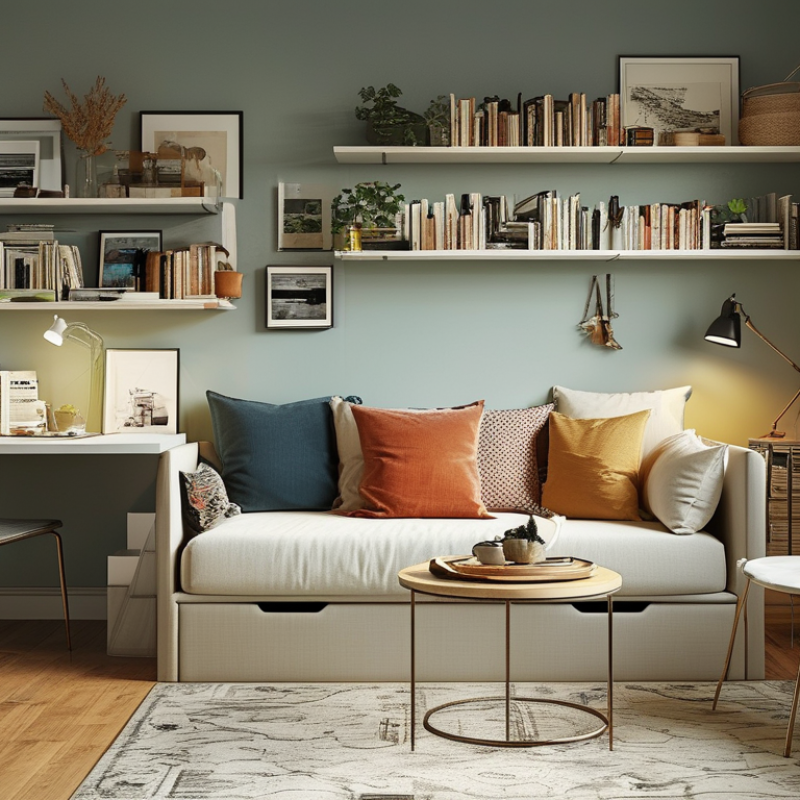
Choosing furniture for a studio apartment starts with measuring your life, not just the room. The U.S. Census Bureau’s 2023 American Community Survey found that about 29% of U.S. households contained one person. A studio must therefore support private routines within one shared area. Record wall lengths, window positions, door swings, and radiator clearance. Leave at least 30 inches for comfortable walking paths. Small errors matter.
Track your daily activities for three days. Do you work at home, cook often, exercise, or host friends? The Bureau of Labor Statistics reported that 26.5% of employed people worked at home on an average day in 2023. A narrow desk near daylight may deserve more space than a large dining table.
Choose furniture by frequency of use. A foldable table helps occasional guests, but constant folding becomes annoying.
Storage should match real objects. Count coats, shoes, cables, cookware, and cleaning supplies before shopping. Use vertical shelving, closed bins, and a bed with measured under-storage. Keep frequently used items between waist and eye level. Measure every item twice. My own mistake was buying a beautiful chair that blocked the balcony door. It looked right in the store. It failed at home. Also, do not trust advertised dimensions alone; include handles, cushions, and the space needed to open drawers.
A studio apartment needs a furniture budget before it needs a shopping list. Measure the room, doorways, and walking paths first. In a 28-square-meter studio, I would reserve money for a bed, compact seating, storage, and lighting. Keep about 10 percent aside for delivery, hardware, or unexpected repairs. These small costs can quietly damage a careful plan.
Set a firm total limit, then divide it by function. Spend more on the bed and daily seating, because poor support becomes expensive discomfort. Choose pieces with two uses, such as a storage ottoman or a table that folds against the wall. Check each item’s width, height, weight, and cleaning needs. Leave at least 60 centimeters for a comfortable main walkway. It sounds precise, but measuring with tape prevents painful surprises.
My selection rule is simple: every large piece must earn its floor space. I once chose a deep sofa because it looked comfortable online. It blocked a cabinet door in real life. That rule failed. Now I sketch furniture on the floor with removable tape before buying anything. Neutral colors can make a small room calmer, but too much matching may feel flat. Mix one warm texture, such as woven fabric, with practical surfaces that handle daily use. Reconsider bargain furniture if it wobbles, smells strongly, or cannot be repaired. A lower price is not always a lower cost.
A studio apartment needs furniture that earns its floor space. Choose pieces with at least two useful functions, such as a sofa bed with hidden bedding storage. A lift-top coffee table can become a work surface, dining table, or place for mail. Measure the room before shopping, including doorways and window clearance. Leave about 75 centimetres for a comfortable walking path.
Look for a storage ottoman near the sofa. It can hold blankets, serve as extra seating, and support a tray when guests arrive. A drop-leaf dining table works well against a wall and opens only when needed. Nesting tables offer flexible surfaces without creating permanent visual clutter. Furniture with casters can move easily, but lockable wheels are safer on smooth floors.
I once chose a large convertible chair because it looked practical. It blocked a cabinet when opened. That mistake taught me to measure furniture in every position, not only when folded. Check hinges, drawer movement, weight limits, and cleaning access before buying. Multifunctional furniture is not automatically efficient. A complicated mechanism may discourage daily use, especially in a small room. Select simple pieces that match your routines, even if they appear less impressive. Avoid filling every corner with storage. Empty space still makes a studio feel usable.
Choose space-saving furniture with multiple functions to reduce floor usage while keeping essential living, sleeping, dining, and storage functions.
Comparison basis: Estimated floor footprint calculated from common furniture dimensions. Smaller footprints and more functions indicate better space efficiency for a studio apartment.
A studio apartment needs furniture that creates order without blocking movement. Treat the room as several useful zones: sleeping, working, dining, and relaxing. A low bookcase can separate the bed from the living area while preserving borrowed light. Place the sofa across a room’s longest sightline, not directly inside the entry path. This creates a visual pause near the door.
Movement matters more than perfect symmetry. The National Kitchen & Bath Association recommends 36-inch walkways and 42-inch work aisles for comfortable circulation. In a studio, that full distance may be unrealistic. Aim for the clearest route between the entrance, bathroom, kitchen, and window. Measure it with masking tape before buying anything. A compact table near the kitchen can serve as a desk, but it should not narrow the main passage. I once preferred a larger sofa for comfort; it made the apartment feel strangely smaller. That choice needed reconsideration.
Tips: Choose furniture with visible legs to preserve sightlines. Keep storage vertical and shallow. Leave about 30 inches around frequently used seating when possible. Use a rug to define the lounge zone, but keep its edges outside the walking route. According to the Environmental Protection Agency, indoor air quality can be affected by household dust and ventilation, so avoid overcrowding heaters, windows, or vents. Furniture planning is not only visual. It is daily risk management.
In a studio apartment, furniture must fit the room and your daily habits. Measure the floor, doorway, and walking paths before shopping. Leave about 60 to 75 centimeters for comfortable movement. A compact sofa may look ideal online, yet overwhelm the room in person. Measure twice.
Storage capacity deserves equal attention. Choose pieces that work harder, such as a bed with drawers or an ottoman with hidden space. Keep frequently used items within easy reach. Store seasonal belongings higher or deeper. Open shelving can display books, but too much of it creates visual noise. Closed storage often makes a small room feel calmer.
Comfort should never become a sacrifice for appearance. Sit on a chair for several minutes and check your back, knees, and arm position. Test the sofa with a real sitting posture, not just a quick glance. I once chose a narrow chair because it looked elegant. Its seat became uncomfortable after ten minutes. That was a poor judgment.
Visual balance comes from proportion, color, and height. Pair a low sofa with a slim floor lamp, rather than another bulky object. Keep heavier furniture near walls when possible. A pale rug can separate the sleeping and living areas without blocking light. Still, perfect symmetry is not necessary. A slightly uneven arrangement may feel more personal, though it deserves another look after living with it for a week.
Record wall lengths, window positions, door swings, and radiator clearance. Include handles, cushions, and drawer-opening space. Measure twice.
Track your activities for three days. Frequent home working may deserve more space than occasional dining. A narrow desk near daylight could help. My judgment may be imperfect.
Keep walking paths about 30 inches, or 75 centimetres, wide. Check this clearance around beds, tables, and seating. Small errors matter.
Count coats, shoes, cables, cookware, and cleaning supplies before shopping. Use vertical shelves, closed bins, and measured under-bed storage. I once underestimated cables.
Consider a sofa bed with bedding storage, a lift-top table, or a storage ottoman. A drop-leaf table saves space against a wall. Keep it simple.
Not always. Folding a table daily may become irritating. Choose it for occasional guests, not constant use. Convenience can disappear quickly.
Measure the furniture when folded and fully opened. Check hinges, drawer movement, weight limits, and cleaning access. It may block a cabinet or balcony door.
No. Empty space keeps a studio usable and visually calmer. Store frequently used items between waist and eye level. Empty space helps.
Learning how to choose the right furniture for a studio apartment begins with understanding the space and your daily routines. Measure the room, note natural light and walkways, and identify the activities the apartment must support, such as sleeping, working, dining, and relaxing. Set a realistic budget and create selection criteria that prioritize durability, comfort, usefulness, and appropriate dimensions rather than appearance alone.
Choose space-saving pieces that serve more than one purpose, such as a bed with drawers, a foldable table, or seating with hidden storage. Arrange furniture to create clear zones while keeping movement smooth and the room visually open. Before buying, check each item’s scale, storage capacity, comfort, and relationship to the rest of the room. A balanced combination of practical functions, suitable proportions, and consistent visual style can make a small studio feel organized, comfortable, and spacious.
