Austin Home
Apartment living asks every piece of furniture to earn its place. A dining table may double as a desk; a storage bed can keep spare linens out of sight. The United Nations’ World Urbanization Prospects: The 2018 Revision projects that 68% of the world’s population will live in urban areas by 2050. That shift makes flexible, space-conscious interiors increasingly relevant, though it does not mean every small apartment needs to look sparse.
So, why choose minimalist furniture for modern apartments? The best reason is practical: clear sightlines, useful storage, and fewer awkward corners can make a compact room easier to live in. The U.S. Environmental Protection Agency also notes that indoor concentrations of many volatile organic compounds can exceed outdoor levels. A clean-looking design alone does not guarantee healthier materials. Check product specifications, finishes, and credible emissions certifications rather than relying on appearance.
This guide will help you assess scale, function, materials, and durability before buying. Measure the doorway, the wall, and the space around each chair. A slim sofa that fits on paper may still block a cabinet when fully extended. Choose pieces with honest proportions and a job beyond decoration. Minimalism can feel cold, too. Wood grain, woven fabric, or a lamp with warm light can soften the room without adding clutter. A little restraint helps; too much can make a home feel unfinished.
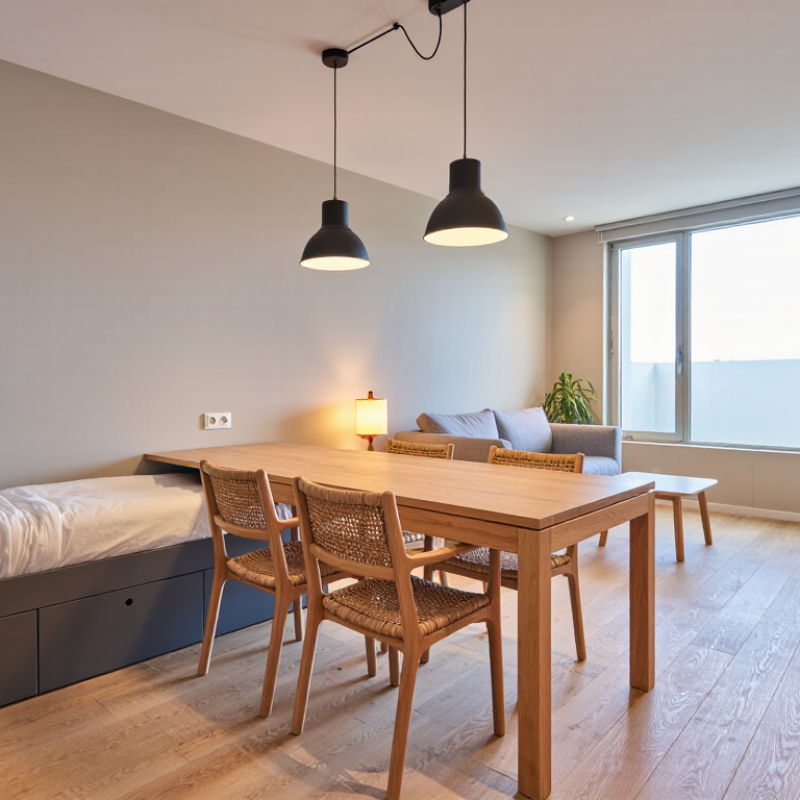
Begin with the apartment you actually have, not an idealized floor plan. RentCafe’s 2024 analysis of Yardi Matrix data found that newly completed U.S. apartments averaged 908 square feet in 2023. That national figure is a reference, not a target: a narrow studio and a two-bedroom home use space very differently. Measure each room, including alcoves, and note doors, windows, radiators, and outlets. Measure twice.
Next, map how you move through the space. Mark furniture footprints on the floor with painter’s tape, then check whether drawers open and paths between the entry, kitchen, and bed stay clear. A slim dining table may suit a tight walkway better than a larger one, even if both technically fit. Don’t plan around a perfect rectangle; corners and door swings often steal usable space.
List daily needs before choosing pieces. If you work from home, decide where a desk can sit without blocking natural light or becoming a permanent obstacle. If guests stay over, a compact sofa bed may earn its footprint; if not, it may be wasted bulk. Minimalist furniture still needs to work hard. I sometimes underestimate storage, so test where coats, cleaning tools, and everyday clutter will go before committing. A tidy plan can meet measurements and still feel awkward in use.
Minimalist style is not an empty room or a strict ban on decoration. It is a way to make each item earn its place through usefulness, comfort, or meaning. In an apartment, that often means clear surfaces, simple shapes, and a restrained mix of materials. A pale wood table, a soft wool rug, and one framed print can add warmth without crowding the room. Less can feel warmer.
Start with the furniture that supports daily routines. A sofa should fit the room and leave a clear path to the balcony or kitchen. Measure doorways, wall lengths, and walking space before buying; a beautiful chair is frustrating if it blocks a cabinet. Choose a bed with useful storage only if you will actually use it. A compact dining table can double as a work surface, but check that its height suits both tasks. Minimalism can become uncomfortable when every choice prioritizes appearance over real habits. I have found that one imperfect, well-used piece often feels more personal than a room of matching furniture.
Tips: Sketch the room and mark windows, outlets, and walkways. Choose two or three main colors, then add texture through fabric or wood. Keep a small tray for everyday items, so tidy surfaces remain practical rather than precious.
Minimalist style favors useful, uncluttered pieces. Compare the approximate floor footprints of five compact essentials to plan your apartment layout.
Example compact planning dimensions: sofa 180 × 85 cm, bed 140 × 200 cm, dining table 120 × 75 cm, desk 100 × 60 cm, and wardrobe 100 × 60 cm. Footprints are calculated from width × depth; actual furniture sizes vary. Allow extra room for movement and access.
Choosing minimalist furniture for an apartment starts with a tape measure, not a shopping list. Record each room’s length and width, then note alcoves, radiators, outlets, and window positions. Measure doorways and stair turns too; a sofa that fits the living room may not reach it. Sketch a simple floor plan, even if it looks rough. Accuracy matters more than neatness.
Mark proposed furniture outlines on the floor with painter’s tape. Keep walking routes clear, and check that doors, drawers, and cabinets can open fully. Leave enough space to pull out a dining chair without blocking the hallway. Small rooms forgive little. It is easy to misjudge scale when viewing furniture online, so compare each item’s listed dimensions with your taped layout. A plan may need adjusting after you try it. That is useful information, not failure.
Tips: Measure twice, especially before ordering larger pieces. Aim to leave comfortable passageways, often around 30 inches where space allows. Put frequently used furniture where it feels natural, rather than forcing perfect symmetry. Take a photo of your taped layout; the camera can reveal crowded corners you missed.
In a small apartment, furniture materials affect durability, weight, and how a room feels. Solid wood can be repaired and develops character, but it may be heavy and costly. Plywood is often lighter and stable when its edges are well finished. Metal frames keep tables visually open, though they can feel cold beside hard floors. Upholstery adds comfort, but textured fabric may collect dust. Feel it in daylight. Check seams, corners, and the underside before buying.
Match each piece to a real daily task. A dining table that folds away can free floor space, but only if folding it is easy enough to do often. A sofa bed serves guests, yet its mechanism needs clearance and regular use can wear the mattress. Measure doorways and walkways, not just the empty wall. Measure twice. A beautiful chair that blocks a cabinet becomes annoying quickly.
Storage works best when it hides clutter without making essentials difficult to reach. A bed with drawers suits items used weekly, while lift-up storage can hold seasonal bedding but needs room to open. Look for smooth drawer runners and sturdy handles; these small details affect daily use. Closed cabinets create a calmer look, although too many can make a compact room feel bulky. A perfect matching set may look sterile. Living with one piece first can reveal what the room actually needs.
Minimalist furniture should feel calm, not flimsy. Check the frame, joints, and upholstery before judging its clean silhouette. Sit on a chair for ten minutes; notice pressure behind your knees and whether your feet rest flat. Small discomforts become daily annoyances. Ask how the piece was tested: ANSI/BIFMA X5.4 covers strength, stability, and durability for lounge seating. A smooth finish alone proves little.
RentCafe’s 2024 apartment-size analysis puts the average U.S. apartment at about 908 square feet, but your room may be much smaller. Measure doorways, walkways, and the space around open drawers. A sofa that fits on paper can still block a narrow route. EPA’s indoor-air guide says some indoor pollutant levels are often two to five times outdoor levels. That does not mean a particular item is unsafe; it does make emissions information and care instructions worth requesting. I’ve learned that a beautiful fabric sample can look very different beside a sunny window.
Tips: Measure twice. Sit before buying. Choose pieces with replaceable covers or repairable parts when possible. For long-term fit, consider how the furniture will work after a move, not only in today’s floor plan. A little extra storage can help, though too much can make a small room feel crowded.
Record each room’s length and width. Note windows, outlets, radiators, alcoves, doorways, and stair turns.
Mark its outline on the floor with painter’s tape. Compare the outline with the listed dimensions.
Aim for about 30 inches where space allows. Keep doorways and frequently used routes clear.
Open doors, drawers, and cabinets fully. Pull out a dining chair, then check whether the hallway remains usable.
Sit for ten minutes. Notice pressure behind your knees and whether your feet rest flat.
Inspect the frame, joints, and upholstery. Ask about strength and durability testing; a smooth finish proves little.
Ask for emissions information and care instructions. Indoor pollutant levels can be higher than outdoor levels, though that alone does not prove a specific item is unsafe.
Choose pieces with replaceable covers or repairable parts when possible. I once trusted a neat floor plan too much; taped outlines revealed a crowded corner.
Choosing minimalist furniture for an apartment begins with understanding how the space is used each day. Consider the room layout, available floor area, household routines, and the activities each space needs to support. Define a simple style and identify essential pieces before shopping, so every item has a clear purpose and contributes to a calm, uncluttered home. Understanding why choose minimalist furniture for modern apartments can help guide these decisions: thoughtful, streamlined pieces can make limited spaces feel more open and easier to use.
Measure rooms, doorways, and circulation paths, then plan where furniture will go before making a purchase. Compare materials, practical features, and storage options to find pieces that suit both your needs and the apartment’s proportions. Look beyond appearance by checking construction, comfort, and how well each item may serve you over time. A careful approach helps create a functional, comfortable interior without filling the apartment with furniture that adds little value.
