Choosing cabinet material affects appearance, stability, maintenance, cost, and indoor air quality. The key question is: what is the difference between MDF and solid wood cabinets? MDF is an engineered panel made from refined wood fibers, resin, and pressure. Solid wood uses natural boards, such as maple, oak, cherry, or walnut. That difference becomes visible around hinges, painted edges, and sink bases.
MDF usually provides a smoother, more uniform surface for painted doors. It also avoids the knots and grain variation found in natural timber. However, damaged MDF can be difficult to repair, especially after prolonged water exposure. Solid wood offers authentic grain, stronger repair potential, and a warmer tactile character. It can also expand and contract with seasonal humidity. A wide oak door may shift slightly near a dishwasher. That is normal, not automatically a manufacturing defect.
Professional guidance helps separate appearance from performance. The National Kitchen & Bath Association’s 2024 design reporting continues to track strong interest in natural wood tones, while Houzz’s 2024 U.S. Kitchen Trends Study shows that kitchen renovations remain significant household investments. These findings explain why homeowners compare durability and visual value carefully. Cabinet panels should also meet relevant standards, including ANSI A208.1 for particleboard or MDF products and EPA TSCA Title VI formaldehyde requirements. Still, certification does not make every cabinet equal. Construction details matter. Check the box material, edge sealing, joinery, finish quality, and warranty. The answer is not perfectly neat. A well-built MDF cabinet may outperform poorly assembled solid wood cabinetry, while solid wood may better suit a repair-focused, long-term renovation.
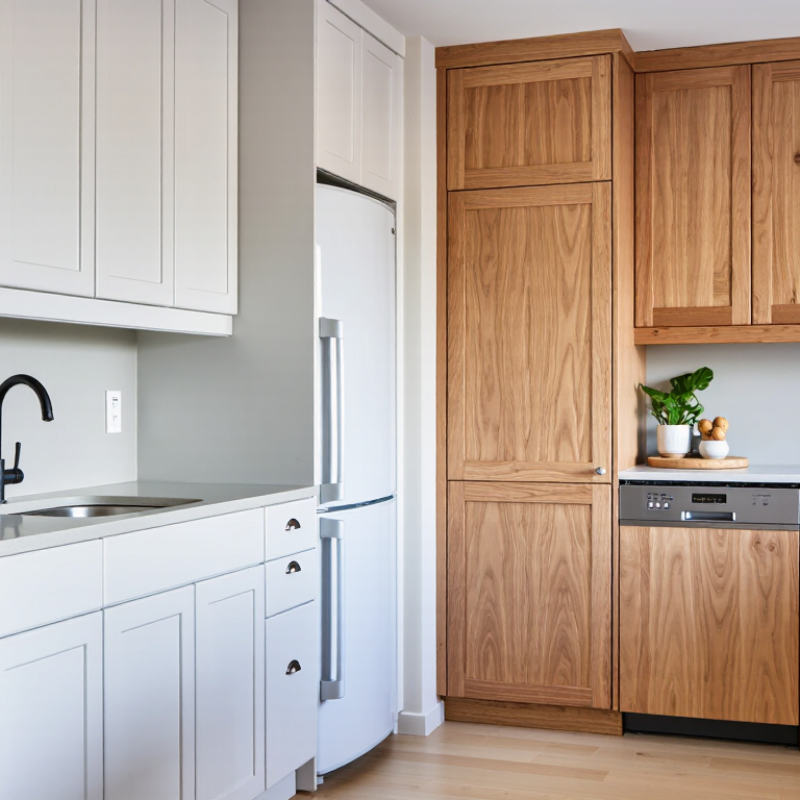
MDF and Solid Wood: Definitions and Manufacturing Processes
MDF and solid wood are made from wood, but their structures differ significantly. MDF, or medium-density fiberboard, is produced from refined wood fibers, wax, and resin. Heat and pressure compress this mixture into smooth, uniform panels. There are no visible grains. The surface feels consistent.
Solid wood comes directly from sawn timber. Each board retains natural grain, knots, pores, and color variation. Manufacturers kiln-dry the lumber before cutting and shaping it. This step reduces moisture, but it cannot remove every future movement. Wood still responds to humidity.
MDF production uses small fibers efficiently, including parts unsuitable for wide boards. The fibers are blended, formed into mats, and pressed under controlled heat. After cooling, panels are trimmed, sanded, and prepared for paint or veneer. Exposed edges usually need sealing because moisture can cause swelling.
Solid wood manufacturing involves selecting boards, cutting components, and joining them with careful grain direction. Cabinet doors may use rails, stiles, and central panels to manage seasonal movement. Moisture content matters greatly. A poorly dried board can twist after installation.
From cabinet inspections, MDF often provides flatter painted surfaces and predictable dimensions. Solid wood offers tactile grain and repairable depth. Neither material is automatically superior. I have seen solid wood move, and I have seen well-sealed MDF perform reliably. That observation deserves caution. Construction quality, edge protection, humidity, and joinery can matter as much as the material itself.
Key Differences in Strength, Stability, and Durability
MDF and solid wood cabinets behave differently under daily stress. MDF is made from compressed wood fibers, creating a smooth and uniform panel. Its surface resists warping better than many natural boards in stable indoor conditions. However, exposed edges can swell quickly when water enters. That weakness matters beneath sinks and near dishwashers. Solid wood has stronger screw-holding power and can support repeated hardware changes. It may also dent less noticeably in some species.
Stability depends heavily on moisture and construction quality. Solid wood expands and contracts as humidity changes. Wide doors may move, crack, or develop small gaps over time. MDF usually stays dimensionally consistent, which helps painted doors maintain a clean appearance. Yet MDF can fail suddenly after serious water exposure. I have seen a swollen cabinet edge ruin an otherwise attractive installation. The problem was not age. It was a small, unnoticed leak.
Durability is not simply a material contest. A well-sealed MDF cabinet can last many years in a dry kitchen. A poorly finished solid wood cabinet can deteriorate sooner. Edge banding, joinery, hinges, and protective coatings deserve close inspection. Solid wood is easier to sand and repair after scratches. MDF is harder to restore once deep damage reaches the core. Still, I would not choose solid wood automatically. For humid rooms, careful sealing and ventilation may matter more than the label.
Comparing Moisture Resistance, Maintenance, and Lifespan
MDF and solid wood behave differently around moisture. Standard MDF has a uniform, smooth core, but exposed edges can absorb water quickly. The Composite Panel Association, using ANSI A208.2 performance standards, lists thickness-swelling limits that can reach about 12% after 24 hours, depending on panel grade. That is not waterproof performance. Solid wood also moves, though. The USDA Forest Products Laboratory’s Wood Handbook reports average shrinkage of roughly 8% tangentially and 4% radially from green to oven-dry conditions. A leaking sink can damage either material.
Maintenance affects lifespan more than many homeowners expect. MDF cabinets need sealed edges, dry wiping, and fast attention to plumbing leaks. Solid wood tolerates light refinishing better, but it needs stable indoor humidity. The Environmental Protection Agency recommends keeping indoor relative humidity between 30% and 50%. Poor humidity control can cause doors to swell, crack, or misalign. The National Association of Home Builders’ life-expectancy study places kitchen cabinets near a 50-year potential lifespan, but that figure assumes proper installation and ordinary use. Real kitchens are less predictable. Heavy steam, wet mops, and weak hinges shorten the estimate.
Tips: Choose moisture-resistant MDF for bathroom or sink areas, and seal every cut edge. For solid wood, inspect joints each season. Do not treat “solid” as maintenance-free. A small leak matters more than the material label.
Design Options, Finishes, and Customization Potential
MDF and solid wood cabinets can both support attractive kitchen designs, but they create different visual experiences. MDF has a smooth, consistent surface that works well with painted doors, slim profiles, and modern panel styles. It does not show natural grain, which can be helpful when you want an even color across every cabinet.
Solid wood offers visible grain, knots, and subtle tone changes. These details make each door feel individual. Oak, maple, and walnut can suit traditional, rustic, or contemporary rooms, depending on the door shape and finish. However, wood may expand or contract with humidity, so accurate installation matters. MDF can also be customized with routed patterns, applied trim, and carefully matched paint colors. Still, I would not assume every painted finish looks equally durable. Sample testing remains important.
Tips: View large samples in daylight and warm evening light. Open and close display doors repeatedly. Check how edges feel. Ask how the finish handles cleaning, moisture, and future touch-ups. For a quiet, seamless appearance, choose MDF with a sprayed finish. For warmth and character, choose wood with a clear or lightly tinted coating. A mixed design can work, too: painted MDF on upper cabinets and wood on a kitchen island. The result may be less predictable than a single material, but that tension can make the room feel more personal.
Cost, Environmental Factors, and Choosing the Right Cabinet Material
What Is the Difference Between MDF and Solid Wood Cabinets?
Cost is often the first visible difference between MDF and solid wood cabinets. MDF usually costs less because manufacturers can produce uniform panels efficiently. Its smooth surface also reduces preparation before painting. Solid wood generally costs more, especially for thick doors, hardwood species, and detailed joinery. Installation, hardware, and finishing can narrow or widen that gap. A cheaper cabinet is not automatically better value.
Environmental performance requires a closer look. MDF can use recovered wood fibers, which helps reduce some material waste. However, its resins may release formaldehyde, so buyers should check verified low-emission certifications. MDF is also difficult to repair after severe swelling. Solid wood can last for decades and may be sanded, refinished, or repaired. Still, responsible forestry matters, and timber drying consumes energy. The greener choice is not always obvious.
Choosing the material depends on the room and your habits. MDF works well for painted doors, stable indoor temperatures, and controlled budgets. Solid wood suits visible grain, long-term refinishing, and areas where small repairs are realistic. Bathrooms and kitchens need careful sealing, regardless of the material. Water finds weak edges. A practical mistake is judging only the sample door; inspect the cabinet box, joints, finish, and warranty terms. My own preference would change with the project, because durability, emissions, and repairability rarely point to one perfect answer.
What Is the Difference Between MDF and Solid Wood Cabinets?
Cost, environmental factors, and choosing the right cabinet material
The chart uses a relative material-cost index, with MDF set at 100. Typical market pricing varies by wood species, thickness, finish, construction quality, labor, and region. A common planning range is approximately 80–120 for MDF and 150–250 for solid wood.
MDF Cabinets
MDF is made from refined wood fibers bonded with resin. It has a smooth, uniform surface that is well suited to painted cabinet doors and is typically less expensive than solid wood.
MDF can make efficient use of recovered wood fibers, but the resin binder means that disposal and formaldehyde emissions should be considered. Standard MDF can swell or lose strength when exposed to water, so edges and sink-area components need effective sealing.
Solid Wood Cabinets
Solid wood provides a natural grain pattern and can often be sanded, refinished, or repaired. It generally costs more because of the raw material, machining, and finishing requirements.
Solid wood is renewable when sourced responsibly, but its environmental impact depends on forestry practices, transportation, waste, and the finish used. It can also expand and contract as indoor humidity changes.
Which Material Should You Choose?
Choose MDF when you want a smooth painted finish, consistent dimensions, and a lower initial cost in a normally dry indoor environment.
Choose solid wood when natural grain, long-term refinishing, and repairability are priorities. For either material, look for low-emission panels, durable finishes, responsible wood sourcing, and construction suited to the room’s moisture level.
Conclusion
Understanding what is the difference between MDF and solid wood cabinets begins with their construction. MDF is made from refined wood fibers, resin, and pressure, creating a smooth and uniform panel. Solid wood cabinets are built from natural lumber, offering authentic grain patterns and a stronger traditional character. Solid wood generally provides greater resistance to impact and can often be repaired or refinished, while MDF is stable and less likely to expand or contract with normal indoor temperature changes.
MDF offers a smooth surface for paint, flexible design options, and usually a lower cost, making it practical for contemporary kitchens. Solid wood provides broader finishing possibilities, distinctive textures, and a potentially longer lifespan when properly maintained. However, both materials require protection from excessive moisture, standing water, and harsh cleaners. MDF can be vulnerable if its edges become saturated, while solid wood needs periodic care to preserve its finish. The right choice depends on budget, style, expected use, maintenance preferences, environmental priorities, and the desired balance between durability and customization.
 Austin Home
