Austin Home Austin Home

How to Transform a Balcony with Functional Furniture

Time:2026-11-11 Author:Oliver
0%

A balcony can feel generous without gaining a single square foot. The difference often comes down to what each piece of furniture can do. A slim bench with hidden storage can hold cushions; a folding table can make room for dinner, then disappear against the wall. These choices matter most where a door swing, railing, or narrow walkway already claims precious space.

Industry research supports treating outdoor areas as useful parts of the home, not leftover corners. The American Society of Landscape Architects’ 2024 Residential Landscape Architecture Trends Survey identifies outdoor living spaces among prominent residential design priorities. Houzz’s 2024 U.S. Outdoor Trends Study also tracks homeowners’ investments in improving outdoor areas. Neither report promises that every balcony needs a makeover. A small space has different limits.

Design reformer William Morris offered a lasting test for furnishings: “Have nothing in your houses that you do not know to be useful or believe to be beautiful.” It suits balcony planning, too. Still, function alone can make a balcony feel like a storage closet. A little restraint helps: leave room to turn, choose weather-ready materials, and check furniture dimensions before buying. Measure twice.

This guide explores how to transform a balcony with functional furniture, from compact seating and foldaway surfaces to storage that keeps daily essentials close. It also considers the compromises: a larger table may crowd the walkway, while a lightweight chair may shift in wind. The goal is not a perfect showroom scene. It is a balcony that works on an ordinary morning, with a cup of coffee, damp cushions, and enough space to move.
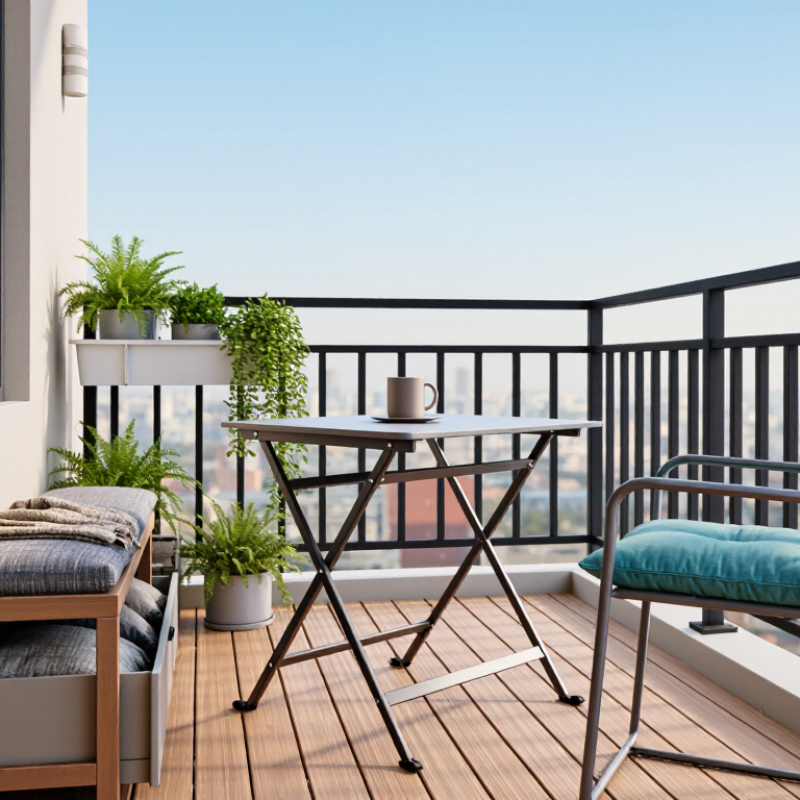
How to Transform a Balcony with Functional Furniture

Assess Balcony Dimensions, Exposure, and Intended Uses

Measure the balcony before choosing furniture. Record its length, depth, door swing, and railing height. Leave a clear path from the door; even a compact chair can block it. A tape measure and a quick floor sketch help reveal awkward corners. Small spaces need breathing room.

Notice how sunlight and wind change throughout the day. A sunny balcony may need shade, while a breezy upper floor calls for stable, lightweight pieces that can be secured safely. Check where rainwater collects, too. Then decide how you will use the space: meals, reading, plants, or a little of everything. I used to focus on seating first, but a tiny table can matter more when outdoor meals are the real goal. Plans can change.

Tips: Measure again before ordering. Mark furniture footprints on the floor with paper or removable tape. Sit outside at different times, and note glare, noise, and wind. Keep the first setup simple; one choice may look right on paper and feel cramped in practice.

Choose Weather-Resistant Furniture That Fits the Space

Before choosing furniture, measure the balcony’s usable floor area, not just its overall length and width. Include the space needed to open doors and walk safely around a table. A chair that looks compact online may feel bulky beside a railing. Leave a clear path. Rain finds every seam.

For exposed balconies, choose materials suited to local conditions. Powder-coated metal and treated hardwood can handle outdoor use, but check care instructions and inspect joints regularly. In coastal or especially wet areas, some finishes may wear faster than expected. I learned that the hard way with a small table whose legs began to wobble after one damp season. Weather-resistant does not mean maintenance-free.

Scale matters as much as durability. A narrow bench can provide seating without blocking the view, while a folding table gives you floor space when it is not needed. Check that chair legs sit securely on your flooring, especially if the balcony is uneven. Cushions should have removable covers or a dry place indoors during storms. It is tempting to fill every corner, but one comfortable seat and a stable side table often make the space more useful than a crowded furniture set.

How to Transform a Balcony with Functional Furniture - Choose Weather-Resistant Furniture That Fits the Space
Furniture Option Typical Dimensions (W × D) Best For Weather-Resistant Materials Space-Saving Function Practical Care Tip
Folding Bistro Set Table: 24–30 in diameter; chairs: about 16–20 in wide each A compact dining spot for one or two people Powder-coated aluminum or galvanized steel frames; outdoor-rated, UV-resistant fabric seats Folding chairs and a folding table can be stored against a wall when not in use Dry metal frames after prolonged wet weather and touch up chipped coatings to help limit corrosion
Outdoor Storage Bench About 36–48 in wide × 18–22 in deep Balconies that need both seating and concealed storage UV-stabilized resin or HDPE; naturally durable teak is another option Combines a seat with storage for cushions, garden tools, or small accessories Keep stored cushions dry and check that the lid and drainage openings remain clear
Narrow Balcony Table About 24–36 in wide × 12–18 in deep Long, narrow balconies where a full-depth table would obstruct movement Powder-coated aluminum, outdoor-rated resin, or sealed hardwood A slim top provides room for meals or plants while using less floor depth Use a breathable cover if needed; avoid trapping moisture beneath it
Two-Person Outdoor Bench About 42–48 in wide × 20–24 in deep Seating along a balcony wall or railing Powder-coated aluminum, HDPE, or weather-treated hardwood Offers seating without the separate footprint of two individual chairs Check the frame’s fasteners periodically and follow the material-specific cleaning instructions
Compact Outdoor Loveseat About 48–60 in wide × 30–34 in deep Wider balconies intended for lounging Corrosion-resistant aluminum frame with quick-drying, UV-resistant outdoor cushions Creates a comfortable seating area for two; some models include a low-profile frame to keep the space visually open Bring cushions indoors or store them in a ventilated container during extended rain or winter weather

Planning tip: Measure the usable floor area, account for doors and railing clearance, and leave a comfortable walking route. Dimensions shown are typical examples; check the product’s listed measurements before buying.

Arrange Seating and Surfaces Around Clear Walkways

A balcony works best when furniture leaves a clear route from the door to the railing. Measure that path before buying anything. The U.S. Access Board’s accessibility guidance uses 36 inches as the minimum clear width for an accessible route; treat it as a useful planning benchmark, not a universal balcony rule. On tighter balconies, keep the main passage as open as possible. A slim bistro table or folding chair can make more sense than a deep lounge set.

ASLA’s 2023 Residential Landscape Architecture Trends Survey found outdoor living spaces were popular with 72% of respondents. That interest makes sense, but a balcony needs careful editing. Place seating against a wall or corner, then add a narrow side table within easy reach. Check that chair legs do not block the door when pulled back. A layout may look balanced on paper and still feel cramped in use.

Tips: Tape the furniture footprint on the floor before purchasing. Walk through with a laundry basket or watering can. If you turn sideways, adjust the layout. I sometimes misjudge table depth, too; leave a little extra room for moving chairs.

Add Compact Storage and Multi-Functional Pieces

A small balcony works harder when each object solves two problems. Choose a bench with a hinged seat for cushions, or a narrow table that folds against the wall. Measure the door swing and walking path before buying; even a useful storage box becomes an obstacle if you must step around it. Keep heavy items low, and use weather-resistant containers with drainage or ventilation. Damp cushions are unpleasant. I learned that the hard way.

Houzz’s 2024 U.S. Houzz & Home Study reported a median renovation spend of $24,000 in 2023, across surveyed homeowners. That figure covers whole-home projects, not balcony furniture, but it shows why small upgrades deserve a clear budget. Compare capacity, materials, and usable surface area rather than price alone. The U.S. Environmental Protection Agency estimated that furniture and furnishings generated 12.1 million tons of municipal solid waste in 2018; choosing durable, adaptable pieces can help avoid short-lived replacements. A wall-mounted rail with hooks can hold gardening tools, while a storage stool gives guests a seat without claiming permanent floor space. Leave one corner open. It may feel inefficient, but room to move is part of the design.

How to Transform a Balcony with Functional Furniture

Typical compact furniture depths (example dimensions, in inches)

Choosing shallower pieces can leave more floor space for movement. Dimensions vary by design, so check each item’s measurements before buying.

Maintain Furniture for Comfort, Safety, and Durability

Keep balcony furniture comfortable by checking it before each season, not just after something breaks. Tighten loose bolts, press each chair leg against the floor, and look for cracked welds or splintered edges. Small checks matter. Wipe rainwater from metal joints, and let cushions dry fully before stacking them. Clear leaves from beneath the furniture so water can drain instead of pooling against the balcony surface. A perfect routine is unrealistic; a missed wipe happens. What matters is noticing dampness before it becomes a persistent problem.

For wooden pieces, moisture deserves attention. The USDA Forest Products Laboratory’s Wood Handbook notes that wood-decay fungi generally need moisture content above about 20% to grow. Keep wood dry, and inspect the undersides of slats, where water lingers unnoticed. Sun exposure also wears finishes and fabrics. The U.S. Environmental Protection Agency advises sun protection when the UV Index reaches 3 or higher; a shade cover can help protect people and reduce direct exposure to furniture. Secure lightweight chairs and cushions before forecast gusts, and avoid blocking drains or the route to the door. These checks take minutes, though I may be overcautious about wobbly legs.

FAQS

How can I keep a balcony walkway clear?

Measure the route from the door to the railing before choosing furniture. Aim for 36 inches where space allows; it is a planning benchmark, not a universal rule. Keep the passage as open as possible.

What furniture works well on a narrow balcony?

A slim bistro table, folding chair, or wall-folding table can use less floor space than deep lounge furniture. Check that pulled-back chair legs do not block the door.

How can I test a furniture layout before buying?

Mark each piece’s footprint with tape. Walk through carrying a laundry basket or watering can. If you turn sideways, the layout probably needs more room.

What is a useful way to add storage?

Try a bench with a hinged seat or a storage stool. These hold cushions while providing seating. Keep heavy items low, and choose containers with drainage or ventilation.

How can wall space help?

A wall-mounted rail with hooks can hold gardening tools without taking up floor space. A folding table can also sit against the wall when not in use.

What should I consider when comparing furniture?

Compare storage capacity, materials, and usable surface area—not price alone. Durable, adaptable furniture may reduce the need for short-lived replacements. That still depends on how well it suits your space.

Why should I leave an empty corner?

An open corner gives you room to move and makes the balcony easier to use. It may look a little unfinished, but a clear path matters more.

Conclusion

Learning how to transform a balcony with functional furniture starts with understanding the space. Measure its dimensions, note how much sun, wind, and rain it receives, and decide how you want to use it—perhaps for relaxing, dining, or growing plants. Choose weather-resistant pieces that suit the balcony’s size, and prioritize furniture that feels comfortable without making the area crowded.

Arrange seating and small tables to preserve clear walkways and easy access to doors. Compact storage, foldable chairs, benches with built-in compartments, and other multi-functional pieces can make limited space more useful. Finish by checking that furniture is stable and safely positioned, then clean and maintain it regularly to protect its comfort and durability. With thoughtful choices and a flexible layout, even a small balcony can become a practical, inviting outdoor retreat.

Oliver

Oliver

Oliver is a seasoned marketing professional with a wealth of expertise in driving brand awareness and engagement. With a deep understanding of our company's product offerings, he consistently delivers high-quality content that enriches our professional blog. His insights not only shed light on......